
iGaming Licensing in 2026: Key Markets to Watch
2026 started with interesting licensing changes. A trend we have been following since 2023 across multiple established and emerging markets. This year, previously unregulated markets are folding into tightened online gambling zones with high entry requirements and even higher rewards. The global online gambling market is projected to exceed US$130 billion in gross revenue in 2026, driven by traditional unregulated markets transitioning to formally licensed jurisdictions.
For operators, iGaming licensing in 2026 is now a top requirement for competitive advantage. Between the UAE’s GCCRA rollout, Brazil’s federal SPA licensing requirements, and the growing iGaming regulatory landscape in North America, early licensing is your greatest asset for scaling.
At DSTGAMING, we have engineered our white-label casino solutions to be regulation-ready, without the technical restrictions of market entry, leaving you to focus on capturing player share in the world’s most lucrative emerging jurisdictions. This review recommends the best markets for iGaming operators to watch for licensing and rewards in 2026.
Latin America: Brazil, Peru, and Chile
Brazil
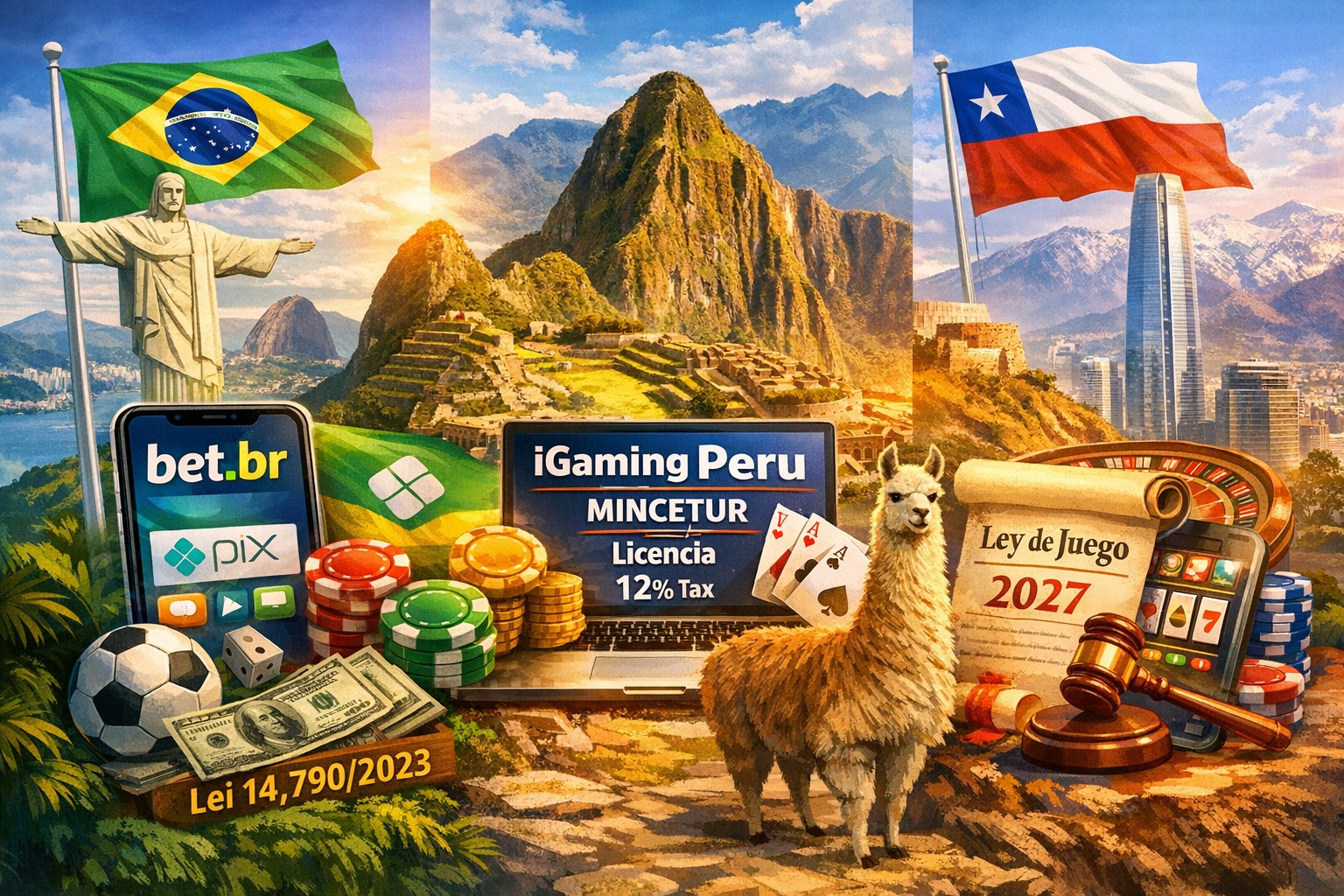
There is no exaggeration about the growth of Brazil’s iGaming market over the last decade. With the seventh-largest population in the world, Brazil has made some interesting regulatory changes, including changes to gambling legislation. The South American giant promulgated Law 14,790/2023 in January 2025, making 2026 a whole year of a federally regulated, licensed iGaming environment, and what a year it has been. The staggering scale, with a fully ingrained betting culture of over 210 million potential players, and a government that needs tax revenue.
Getting Federal SPA (Secretariat of Prizes and Betting) licenses carries a heavy fee of at least US$5.4 million and a mandate for 20% local ownership, which has reshaped how foreign operators structure their Brazilian entities. All licensed operations must also transition to the “bet.br” domain. This requirement serves as both consumer protection and brand differentiation while providing ISPs with an efficient mechanism to block unlicensed iGaming entities.
Brazil also entered a notable payment infrastructure revolution, with PIX dominating the iGaming payment space. PIX is a Brazilian instant payment system that processes instant transactions at near-zero cost. Interestingly, Brazil has banned the use of credit cards for gambling transactions in an attempt to improve responsible gaming among local players.
Peru and Chile
Peru started 2026 as the first full operational year under the Ministry of Foreign Trade and Tourism (MINCETUR) ‘s revised iGaming regulatory structure. The revised framework consolidated licensing, improved KYC/AML obligations, and clarified the tax treatment at a 12% gambling tax rate. Peru is no longer the straightforward market we knew before the 2022 Law 31557; the MINCETUR structure has turned it into a rewarding market for patient operators and local engagement.
Meanwhile, Chile is moving through the legislative pipeline faster than anyone could have predicted. The La Agrupación de Plataformas de Apuesta en Línea (Association of Online Betting Platforms), an organisation formed by five of the largest international betting houses operating in Chile, also known as “aPAL”, has sponsored an iGaming bill currently advancing with a projected 2027 licensing regime. However, waiting till 2027 before taking the necessary licensing steps is a sure way to fall behind the competition. When it launches, Chile’s formal market will offer a predominantly mobile user base and a product-specific culture, making it attractive to operators already familiar with its payment ecosystem.
The UAE
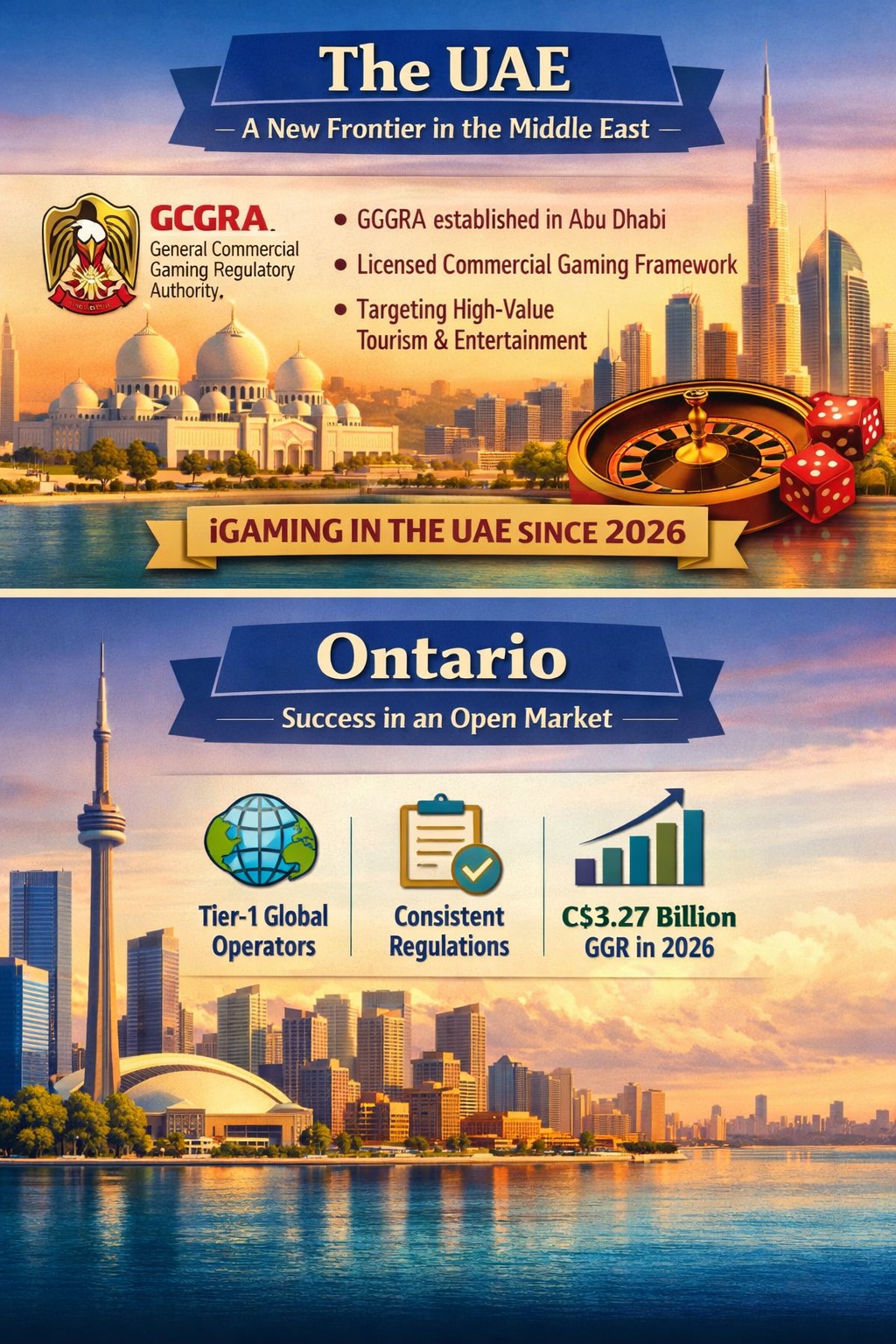
Between the religious restrictions and the elitist perspective, the Gulf Cooperation Council rarely comes to mind when we discuss online gambling, which is why the UAE’s 2026 iGaming development is even more remarkable. The General Commercial Gaming Regulatory Authority (GCGRA) has been operating in Abu Dhabi since 2023. It has established a licensed commercial gaming framework in a jurisdiction that was previously shut out of iGaming. Close observers will recognise that GCGRA is a deliberate policy instrument designed to capture high-value tourism and entertainment revenue in the Middle East.
We already feel its impact across the industry. Google Ads updated its gambling advertising policies in March 2026 to permit advertisements from GCGRA-licensed entities. This implies that a licensed operator in Abu Dhabi can now run compliant paid search campaigns through Google Ads, a privilege not available to their competitors in unlicensed markets.
As usual, the UAE is positioning itself as the destination for high-net-worth gaming, further opening its borders to premium players who travel to gaming jurisdictions and spend on hospitality and entertainment. DSTGAMING supports operators entering the UAE market by providing secure payment systems tailored to the region’s unique transactions, including multi-currency support and compliance with GCGRA technical standards.
Ontario
Ontario is proof that an open-market regulatory framework can generate extraordinary commercial outcomes. The province’s iGaming market reached a projection of C$3.27 billion in gross gaming revenue for 2026, riding on a framework that invited Tier-1 global operators to compete under a consistent, professionally administered set of rules.
iGaming Ontario (iGO) implemented revenue-sharing and fee models structured to attract premium operators while maintaining meaningful oversight. The result is a competitive marketplace where brands invest in product quality, localisation, and player experience rather than exploiting regulations. Player behaviour reflects something more interesting; iGO’s data shows that over 86% of active players now engage exclusively within regulated channels, a metric that seemed impossible in 2019.
The Ontario model is sustainable because of the iGO’s ongoing regulatory maturity. The authority has shown its willingness to review advertising standards, responsible gaming requirements, and operator obligations in response to operator and customer experiences, rather than adhering rigidly to frameworks drafted before the market launched.
Kenya, Nigeria, and South Africa
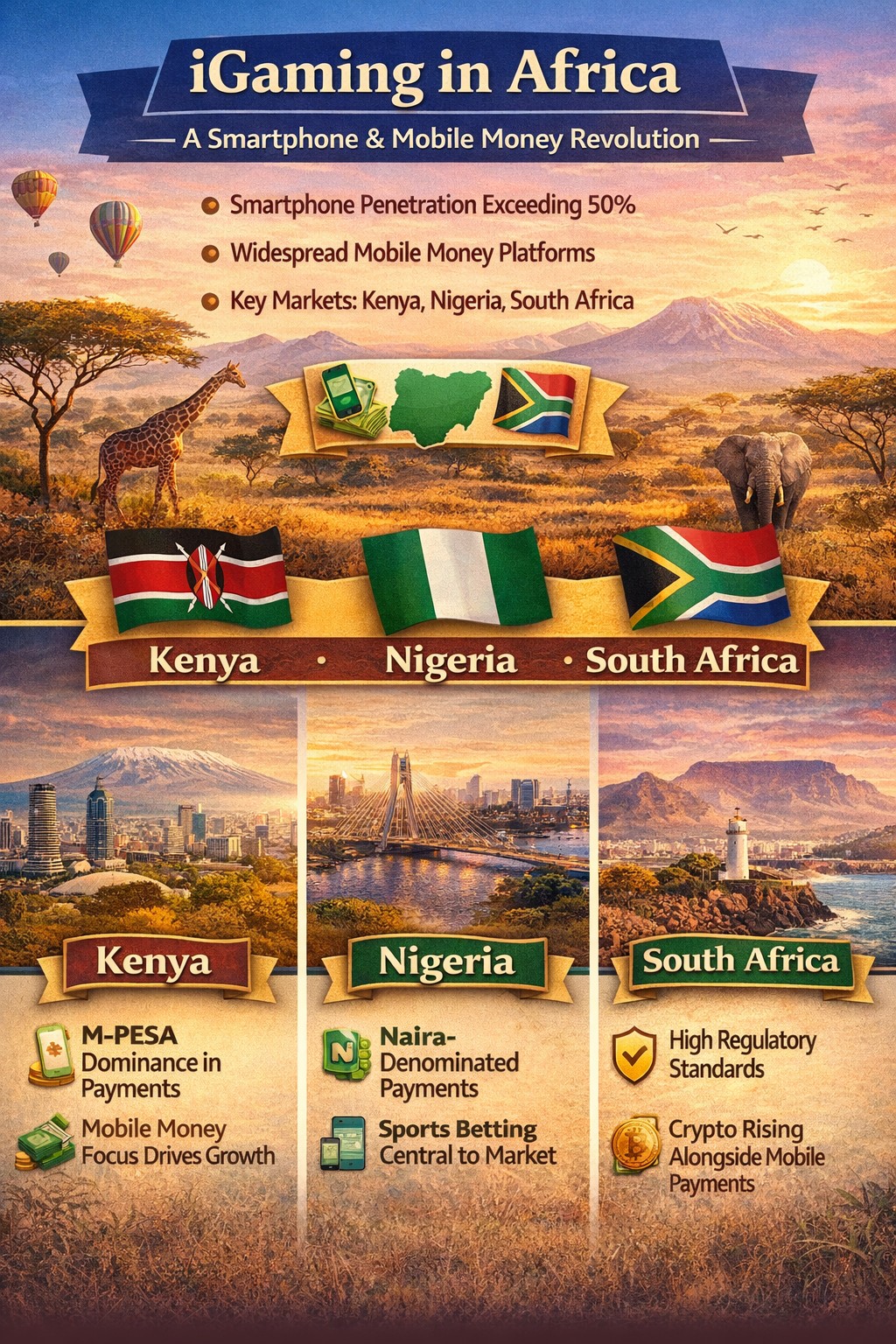
The iGaming story in Africa is fundamentally different from what we have recorded in every other region. The growth of iGaming in the region relies on infrastructure outside the usual broadband cables or credit card rails. iGaming in Africa has developed largely as smartphone penetration has exceeded 50% in key markets. Naturally, the smartphone integration is closely accompanied by widespread mobile money platforms that have now fueled iGaming development across the continent.
Fintechs in Africa have built functional financial systems that compete with formal banking. Fintech Unicorns like Interswitch, Flutterwave, and Wave are leading the fintech revolution, alongside top payment platforms like M-Pesa and Paystack. An operator launching in Kenya or Nigeria without a mobile-first product strategy is not launching at all.
The three largest markets present distinct operating environments. South Africa’s regulated online gambling landscape is evolving, with online cricket betting among the top betting options in the country. However, the provincial licensing structure is complex enough to require local legal and technical expertise. Nigeria presents a different dynamic, with strong local operator dominance, where 71% of the population engages in sports betting. The National Lottery Regulatory Commission (NLRC) also has increasingly firm AML and advertising standards to manage unregulated access. Similarly, Kenya’s Betting Council and Licensing Board (BCLB) has produced one of Africa’s most mature mobile betting environments.
Launching a competitive platform across these markets requires genuinely cross-platform infrastructure, not desktop-adapted for mobile, but built mobile-first and scaled upward. DSTGAMING’s cross-platform framework is ideal for this market, offering low-latency performance on modest hardware, integration with mobile money APIs, and a localised UX that does not interchange Lagos with Cape Town.
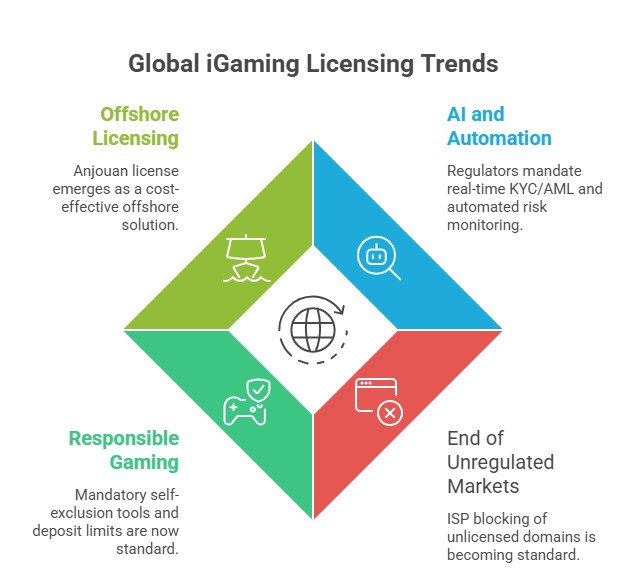
Emerging Global Trends in 2026 Licensing
AI and Automation in Compliance
Regulators in Brazil, the EU, and recently across Africa are mandating real-time KYC/AML capabilities and automated player risk monitoring. These jurisdictions now demand proactive systems beyond static compliance checks. Operators must deploy compliance structures that identify problematic gambling patterns as they emerge, not after a quarterly audit.
The End of Unregulated Markets
The era of operating under the informal protection of ambiguous jurisdictions is finally coming to an end. ISP blocking of unlicensed domains has become standard enforcement practice in Brazil, the UAE, and across other emerging markets. Operators must now use “dot country” domains that simultaneously meet regulatory requirements and improve consumer trust.
Responsible Gaming as a Licensing Condition
Responsible gaming obligations have transitioned from optional corporate social responsibility into firm licensing conditions. The standard now includes mandatory self-exclusion tools across all platforms, bans on influencer advertising targeting underage audiences, and strict deposit limits. These frameworks are now standard licence conditions in Ontario, Brazil, and the UK, and are spreading into other countries.
The Shift in Offshore Licensing
While localized regulations tighten globally, operators still need flexible offshore options to reach international audiences. As traditional hubs like Curaçao undergo complex overhauls, the Anjouan license has rapidly emerged as 2026’s premier offshore solution. It functions as a highly cost-effective “master license” covering all iGaming verticals, allowing operators to bypass heavy bureaucratic delays.
However, offshore success still requires robust technology. DSTGAMING fully supports the Anjouan framework. Our turnkey solutions pair this rapid license with a pre-configured platform, getting your casino live instantly while seamlessly integrating the high-quality guest post content and marketing tools essential for building immediate brand authority.
Key Markets at a Glance: Licensing Comparison
| Market | Regulator | Est. License Fee | Market Status |
| Brazil | SPA (Federal) | US$5.4M+ | Newly Regulated |
| UAE (Abu Dhabi) | GCGRA | Undisclosed | Pioneer Phase |
| Ontario, Canada | iGaming Ontario (iGO) | C$100K+ | Mature/Open |
| Nigeria | NLRC | ₦100M+ | Growing |
| South Africa | WCGRB / Various | ZAR 500K+ | Fragmented |
| Peru | MINCETUR | US$300K+ | Operational |
| Chile | aPAL (pending) | TBD | Upcoming (2027) |
Overcoming Licensing Hurdles with DSTGAMING
Understanding and identifying an attractive market is not the same as actually operating in it. Most operators lose resources and their competitive advantage by trying to understand emerging markets when they should be moving into strong competitive positions. Operators also address issues such as licensing fees, technical certification requirements, local partnership structures, and platform-readiness timelines before they can consider marketing and scaling options. This is where you need DSTGAMING’s white-label and turnkey solutions.
Speed to market
DSTGAMING’s white-label platform can be deployed in 6 weeks or less, a timeline not achievable with proprietary platform development. For markets where license windows are competitive and first-mover advantages are real, six weeks versus eighteen months is an advantage you can’t miss.
Cost efficiency
Brazil’s US$5.4 million SPA license is still an overwhelming entry demand, and it is not even the entire cost. Additionally, the cost of market entry includes technical certification, establishing a local entity, payment integration, and staffing. DSTGAMING’s infrastructure provides sub-licensing and pre-certified software pathways that enable operators to navigate these requirements without rebuilding every component from scratch. The Turnkey Casino Solutions framework integrates over 10,000 games from top-tier providers via a single API, eliminating the need for per-provider integration costs.
The Future is Regulated
2026 is the year of local licenses in emerging markets. Operators thriving in Brazil, Ontario, the UAE, and across African markets are those that engaged with regulatory frameworks early, built compliant technical infrastructure, and partnered with experienced operators who understood the regulatory and technical demands of each region.
Having a great user interface will always be necessary, but it is no longer sufficient. Success in 2026 requires compliance engineering, payment localisation, responsible gaming infrastructure, and the organisational capacity to maintain all of it as regulations evolve.