
Turnkey Sportsbook vs. Custom Development: Which Is Better?
As a result of the fast growth in the sportsbook market, operators have to make smart platform decisions early on. A lot of new businesses want to get in before their competitors do, and some want a platform that can help them reach their long-term goals. Because of this, the choice between a turnkey sportsbook and a custom build comes up at every stage of the planning process.
At DSTGAMING, we understand that both methods meet real needs, but they are used for very different business strategies. The challenging part isn’t picking the most popular choice, but picking the one that fits your budget, timeline, and ownership goals. So, the first thing that needs to be done is to understand how each model works and what the long-term trade-offs are. Therefore, in this article, we’ll compare these two models from an operator’s point of view.
Understanding the Two Approaches
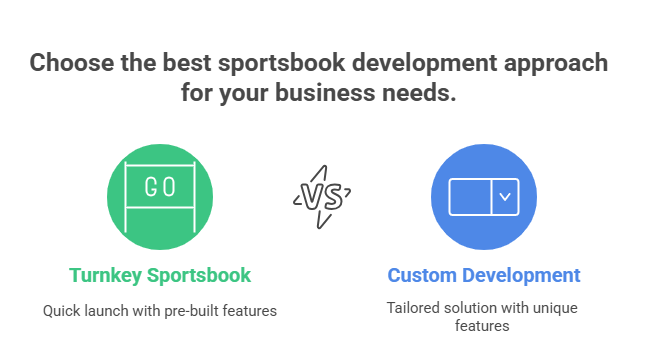
A turnkey sportsbook is a system that is ready to be used right away and already has all the important features and integrations built in. A lot of the time, it includes the betting engine, payments, player management, and ongoing support. For new operators, this means they can launch in weeks instead of months.
Because the platform is built from scratch, custom development is not the same as other solutions. Every feature, design choice, and integration is decided by the operators. This can lead to a product that fits a very clear vision, but it takes a long time and costs a lot of money. There is real progress in both models, but they take different paths to get there.
DSTGAMING offers both turnkey and flexible development paths, so the company works directly with clients who have to make this choice. In most cases, the choice rarely comes down to what you want. Instead, it depends on the stage of the business, the resources available, and the long-term goals of the owner.
Why Time to Market Matters
For most people who want to get into sports betting, speed is very important. Licensing slots don’t always stay open because markets change quickly. With a turnkey sportsbook, there are no more delays in creation because the technology has already been tried and tested. This is why a lot of new operators pick it to see how much demand there is and get early success.
Reports say that by 2030, the global market for sports betting will have grown to $182.12 billion. At that rate of growth, brands that want to reach people in emerging regions have to move quickly. A quick launch gives operators a chance to get people to play before there is more competition.
The same timeline can’t be given for custom development because the entire platform has to be built, tested, and certified. For large operators, waiting might not be a problem, but for new businesses, it can make it harder to plan their finances. Time to market is the first big difference between the two, and it often determines which one is chosen.
Cost and Budget Planning
Because the core platform is already there, a turnkey sportsbook requires less money to set up. There is no need to hire engineers, product teams, or separate compliance experts. The idea of predictable pricing helps new businesses avoid costs they didn’t expect.
For planning, development, ongoing testing, and infrastructure, custom development requires money. The company also has to take care of maintenance and future updates. This makes the model suitable for brands with large investment plans and a clear long-term direction.
DSTGAMING offers operators both options, as well as flexible payment solutions and customer relationship management (CRM) tools that support revenue growth. Budget isn’t just about launch price, though. It also has to do with the long-term costs of running the business, which are different for each model.
Control and Ownership Expectations
Since the operator owns the source code, custom development gives them the most control. So, every feature can be changed without having to wait for a vendor’s release schedule. Businesses can also build their own betting tools that set them apart in crowded markets.
With a turnkey system, you can choose your own branding and make changes to the front end, but the provider keeps the core technology. This is fine for many operators because they’d rather work on marketing and getting new players than managing software.
DSTGAMING works with both types of clients. Some want full control, while others just want stability without the need for an internal development team. The decision will depend on whether control or operational efficiency is more important in the early stage.
Compliance and Licensing Support
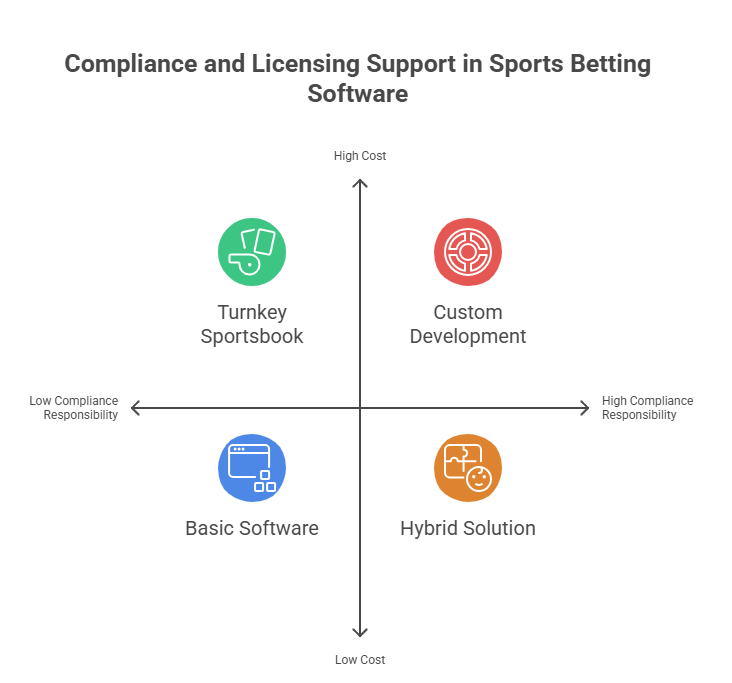
There are strict rules about licensing, reporting, and security for sports betting. Because the software has already been validated in multiple jurisdictions, a turnkey sportsbook will often help with these needs. As new regulations come out, providers also make updates to the platform.
When custom development is chosen, the operator takes on more responsibility. The business has to get certification and keep up with updates to regulations. This makes things more complex and expensive, especially in regions where policies change often.
A lot of the time, new operators don’t realize how much compliance work takes. A turnkey model solves this problem by offering advice and systems that have already been approved. As part of its payment solutions, DSTGAMING also offers tools to prevent risk and fraud.
Feature Scope and Innovation
There are advanced features in both models, but they are implemented in different ways. Essentials like live betting, settlement, reporting, and player management are already built into turnkey systems. Operators can launch immediately without having to wait for development cycles.
Custom development allows teams to build features that aren’t available anywhere else. This helps brands stand out in markets that are already saturated. It works for companies that want to create multi-brand ecosystems or versions for different regions as well.
It takes time for innovation to become successful, and not all operators need it from day one. Many businesses start out with a turnkey sportsbook and only think about customization once they are making a profit. This step-by-step approach reduces risk and helps with controlled scaling.
Scalability and Future Growth
Scalability depends on how quickly a platform can handle new markets and more traffic. Because the provider takes care of the infrastructure, a turnkey sportsbook can already handle more customers. This makes smaller operators feel more confident as they grow.
Scalable architecture is also possible with custom development, but only if the operator pays for it from the beginning. This includes hosting, security, and performance tuning. Scaling up can be challenging if you don’t have the right in-house expertise.
Through its game aggregator API, DSTGAMING connects operators to various markets, which makes expansion easier. How easily that growth happens depends on which model is chosen.
Maintenance and Support
Because the provider runs the entire system, turnkey platforms come with technical support and updates. This keeps the platform secure and cuts down on internal workload. So, operators can focus on player retention instead of worrying about patching software.
Custom platforms need to be developed and monitored all the time. It’s up to the operator to either put together its own technical team or hire external partners. This increases cost, but it gives you complete freedom.
A lot of operators don’t realize how much ongoing responsibility comes with custom development. At DSTGAMING, we’ve come to discover that support is often what makes the difference for new businesses when they have to choose between these options.
Revenue and Long-Term Strategy
Some turnkey sportsbook providers use revenue-share models, which lower costs up front but hurt profits in the long run. Others charge fixed fees for licensing. Each structure affects the financial strategy differently.
For custom development, the operator owns the platform outright, so there is no revenue sharing. This can increase profits in the long run, but only after the initial investment is recovered. This makes sense for companies with a lot of funding, but not for new businesses.
Which option is best for the operator depends on whether they want to be sustainable early on or become independent in the future.
When Turnkey Works Best
A turnkey sportsbook is good for operators who want to get up and running quickly and keep costs low. It also works for companies that are new to the market or want to see what the demand is like in a certain region.
It makes sense when:
- The budget is limited at launch
- Unique features are less important than speed
- The team would rather focus on marketing than on software
- Regulatory guidance is needed
With this approach, operators can start out in a safe position with minimal risk.
When Custom Development Makes Sense
Custom development is good for brands that want to own full ownership and have a long-term product vision. Large operators who want to build something that can’t be copied can also use it.
It makes sense when:
- The company has strong funding
- Full control is required
- Part of the strategy is to have unique features
- The team can handle maintenance and licensing
- The investment only pays off if the operators want to expand in the long run.
A Third Option Some Operators Choose
Some businesses use a hybrid solution that starts with a turnkey platform and then adds their own custom components. This reduces risk while still encouraging innovation. It allows operators to get into the market early and add unique features over time as their business grows.
DSTGAMING supports this path by giving operators flexible configurations that don’t lock them into a single model. This approach works well for brands that don’t want to pick one option over the other.
How to Make the Final Decision
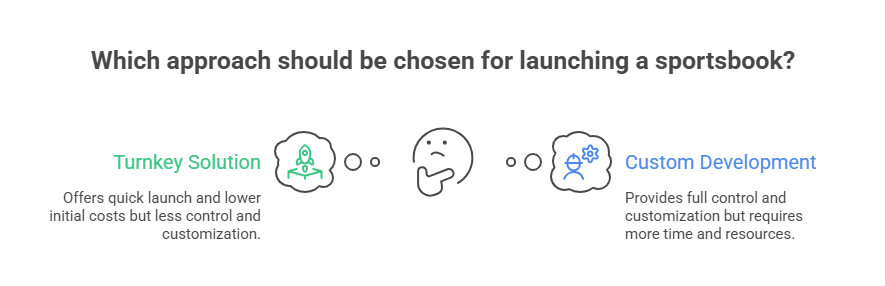
It’s important to know what you want before you choose between a turnkey sportsbook and custom development. The operator has to think about timing, financial planning, internal expertise, and the level of control they want. There isn’t a universal answer because each option is better in certain situations.
A practical evaluation includes:
- when the launch will happen
- budgets for the short and long term
- technical resources
- regulatory obligations
- competitive goals
Conclusion
Custom development and turnkey sportsbook solutions both help businesses succeed, but they do so in different ways. A turnkey model lets you set up your platform quickly, budget your money wisely, and make sure you’re following the rules. On the other hand, custom development gives you full control of the platform; it can grow as you require, and it has its unique value.
The best choice is based on strategy, not on what you want. Turnkey systems are often better for new operators, but big or well-known brands may want to build their own platform. Making sure that the solution fits with your long-term vision, business goals, and available resources is very important.
How long does it take to launch?
Turnkey sportsbooks offer the fastest time to market, typically allowing you to launch in 2 to 6 weeks since the core technology is pre-built. Custom development is a long-term project that often takes 6 to 12 months (or more) to design, build, test, and certify before you can accept the first bet.
Who owns the code and the data?
With Custom Development, you own 100% of the source code and intellectual property, giving you total independence. With a Turnkey solution, the provider retains ownership of the core software code. However, you usually retain ownership of your player data and brand assets, but you are dependent on the provider for software updates.
Can I customize the features and design?
Turnkey platforms allow for frontend customization (branding, colors, UI), but you cannot easily change the core betting engine or add unique features without the provider's help. Custom development offers unlimited flexibility; you can build unique features, betting markets, or gamification tools that no competitor has, provided you have the budget.
Do I need my own gambling license?
Turnkey providers often assist with licensing or provide a "White Label" option where you operate under their existing sub-license, simplifying compliance. In Custom Development, you are solely responsible for obtaining and maintaining your own gambling licenses in every jurisdiction you operate in, which is complex and costly.
Is licensing included in DSTGAMING’s white label solution?
Our white label solution includes access to a sub-license under supported jurisdictions—such as Anjouan—allowing operators to launch faster without managing the full licensing process. This offers a simplified entry point while meeting baseline regulatory requirements.