
How to Customize a Turnkey Casino to Match Your Brand Identity
A turnkey casino gives you a complete platform quickly. The catch is that a fast launch can leave you with a casino that looks and feels like everyone else’s, and players notice. When ten brands offer the same games and the same welcome bonus, the one people remember is the one with a clear identity.
The good news is that you don’t have to pick between speed and individuality. This guide shows you how to customize a turnkey casino so it reflects your brand, from design and user experience to games, bonuses and payments, while keeping the platform stable and compliant.
What Does It Mean to Customize a Turnkey Casino?
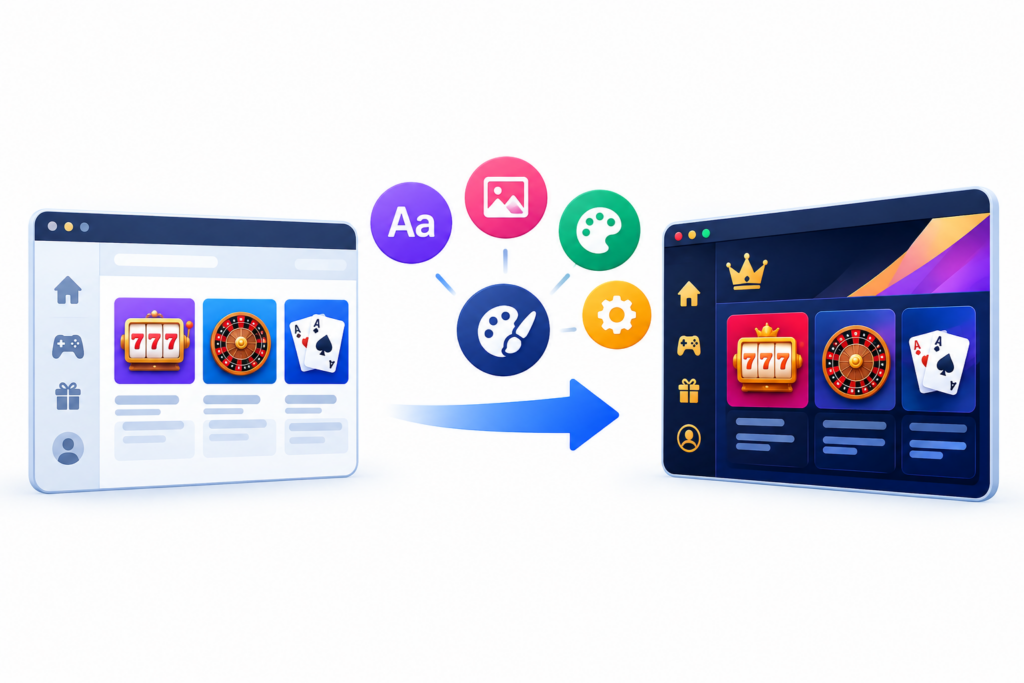
A turnkey casino solution provides the core technology: player accounts, wallet, game integration, payments, back office and risk tools. Customization is the work you do on top of that foundation so the casino feels like your business.Think of the platform as a well-built house and customization as everything that makes it yours, from the paint to the doormat.
It helps to think in four layers:
- Visual identity: logo, colours, typography, imagery and motion
- Player experience: lobby layout, navigation, onboarding and cashier flow
- Commercial identity: game selection, bonuses, loyalty and promotions
- Voice: the tone of your copy, emails, notifications and support replies
Not everything should be customized. Some parts of a regulated platform, such as age checks and responsible gaming controls, need to stay consistent and visible. We cover this in the guardrails section below.
Step 1: Define Your Brand Before You Touch the Design
Designers cannot make a casino feel distinctive if the brand itself is unclear. Spend a short workshop on four questions before anyone opens a design tool.
- Who is the player? Be specific. A casual mobile player who plays during a commute wants something different from a high-value player who values VIP service.
- What is your promise? Fast withdrawals, exclusive content, a premium feel, a community? Pick one main promise and one supporting promise.
- What three words describe the brand? For example, “bold, playful, transparent” or “calm, premium, trustworthy”. These three words become a filter for every later decision.
- What will you never do? A premium brand that floods players with loud pop-ups will confuse them. Write down the things that are off-brand.
Put the answers into a one-page brand-brief. It saves hours of debate later and gives your designers, copywriters and developers the same reference point. It also settles the “but I just like blue” arguments.
Step 2: Design the Visual Identity and Player Experience
Build a simple design system
A design system is a small set of rules that keeps the casino consistent: a colour palette, two typefaces, button styles, spacing and icon style. It makes the site look professional and makes future changes much faster.
A few practical tips:
- Choose one primary colour and one accent. Too many bright colours make a casino feel noisy and hard to read. A casino already has plenty going on.
- Check contrast. Text must stay readable on every background. Following the WCAG accessibility guidelines helps all players, including those with visual impairments.
- Keep the logo flexible. It should work on a dark header, a light background and a small mobile icon.
Design mobile first
Most players will arrive on a phone viewport, so design for the small screen at first. Keep the main actions, such as deposit and search, within easy thumb reach. Keep menus short. Make sure the lobby loads quickly, because heavy images and animations slow it down and push players away. Nobody waits patiently for a spinning logo.
Shape the lobby around your promise
The lobby is your shop window, and its layout should show what your brand stands for. A casino built around live dealer content should put those tables first. A casino built around fast, simple play might lead with instant games. A premium brand may prefer a cleaner layout with fewer, larger tiles.
Test the journey from landing page to first spin. Count the clicks. Every unnecessary step is a chance for the player to leave. Our guide on how to optimize casino onboarding goes deeper on this part of the journey.
Step 3: Curate Games That Fit Your Brand
With access to thousands of titles, the temptation is to show everything. But a brand is defined as much by what it leaves out. A casino game aggregator can give you a very large library, and your job is to turn that library into a clear point of view.
Consider these approaches:
- Curated by audience. Highlight the studios and themes your target players already like.
- Curated by mood. Group games into collections such as “Quick spins” or “Table classics” instead of one endless list.
- Curated by market. Show different games in different countries, and respect local rules. An aggregator does not decide what is legal in each market, so local checks remain your responsibility.
- Use data. Review which games players open, how long they stay and where they drop off, then adjust the lobby every few weeks.
A strong lobby makes players feel the casino was built for them. For more on what separates a good casino from an average one, may study the context of what makes a great online casino.
Step 4: Make Bonuses, Loyalty and Gamification Feel Like Your Brand
Promotions are part of your brand voice. Two casinos with the same welcome bonus can feel completely different depending on how they present it and what they reward.
- Keep the offer clear. Plain language and visible terms build trust faster than large headline numbers.
- Match rewards to your promise. A brand that promises exclusivity might offer early access to new games, while a community-led brand might run tournaments.
- Avoid copy-paste promotions. Generic offers attract bonus hunters, not loyal players.
- Add a progression system. Missions, levels and achievements give players a reason to return. Our gamification solutions are designed for this kind of engagement.
Always keep bonus terms and wagering conditions easy to find. Regulators in many markets have strict rules on how promotions are advertised, so check the requirements for each country you serve.
Step 5: Align the Cashier and Payment Experience
Payments are a brand moment, even if they rarely feel like one. A cashier that looks different from the rest of the site, or that uses confusing wording, makes players hesitate at the exact moment they are about to deposit. Few things kill the mood like a cashier that looks like it belongs to another casino.
Make the cashier feel native:
- Use the same colours, fonts and tone as the rest of the casino.
- Show familiar local payment methods first. Our guide to casino payment methods explains how to choose them.
- Explain limits, fees and processing times in plain language.
- Make the withdrawal process as clear as the deposit process.
With casino payment solutions that cover many methods, resist the urge to show every option. Show the right ones for each market.
Step 6: Give the Brand a Consistent Voice
Your voice appears in dozens of places: the homepage, error messages, welcome emails, push notifications, support chat and responsible gaming messages. If the tone changes from one to the next, players sense it. A brand that is witty on the homepage and robotic in its error messages looks like it has two personalities.
Create a short voice guide:
- Three tone rules. For example: friendly but not childish, clear but not blunt, confident but never pushy.
- Words to use and words to avoid. A premium brand might avoid slang. A playful brand might embrace it.
- Sample messages. Write examples of a welcome email, a withdrawal confirmation and a “we miss you” message.
Pay special attention to sensitive messages. A responsible gaming reminder should sound caring and calm, not like a warning label. This is also a place where the brand shows its values.
Guardrails: What Not to Customize
Some elements are there to protect players and keep your licence safe. Whatever your design preferences, keep these visible and working as the regulator expects:
- Age verification and KYC steps
- Responsible gaming tools, such as limits, reminders and self-exclusion
- Terms and conditions, bonus terms and privacy information
- Licence details and required regulatory messages
- Clear, honest descriptions of odds, RTP and rules where required
You can style these elements to match your brand, but do not hide them or make them hard to use. Requirements differ by jurisdiction, so confirm the details with your legal adviser.
Common Mistakes to Avoid
- Customizing before defining the brand. Beautiful design cannot fix an unclear message.
- Overloading the lobby. More tiles do not mean more engagement.
- Ignoring performance. Heavy visuals can slow down the site and hurt conversion.
- Forgetting the back office. Your team needs tools that fit your workflow, not only a nice front end.
- Never revisiting the design. Brand and player expectations change, so review your lobby, offers and copy regularly.
Pre-Launch Checklist
- Brand brief completed and approved
- Design system applied to the site, cashier and emails
- Mobile experience tested on real devices
- Game library curated for each target market
- Bonus and loyalty rules reviewed against local regulations
- Responsible gaming and compliance elements checked
- Support team trained on the brand voice
- Analytics ready to track registration, deposit and retention
Final Thoughts
A turnkey casino gets you to market quickly, but your brand is what keeps players coming back. Define who you serve and what you promise, build a simple design system, curate your games, shape your offers and keep every touchpoint in the same voice, all while protecting the compliance features that keep you licensed.
Check it out on DSTGAMING provides turnkey casino solutions with game aggregation, payment infrastructure and risk tools for operators entering regulated markets.