
Blockchain Transparency as a Player-Trust Signal (Beyond the Buzzword)
A trust signal only works when a dishonest operator cannot fake it as cheaply as an honest one can produce it. “Licensed, secure and transparent” costs nothing to type, so players have learned to scroll straight past it.
Think of a restaurant. Anyone can print “spotless kitchen” on the menu. An open kitchen lets you look for yourself. That is the difference between a claim and a signal.
Blockchain transparency belongs in the second category, though not because public data is automatically reliable. Its value is that a published wallet address, payout record or reserve disclosure creates evidence that can later contradict the operator. A blockchain transparency casino strategy becomes credible when that evidence is current, attributable and easy to check.
That matters commercially. A prospective player is weighing whether the operator is identifiable, whether withdrawals will work as described, and whether anything independent backs up the marketing. Transparency reduces friction only when it shortens the path from claim to verification.
The friction is the cost of checking
Player complaints show where the uncertainty lives. Casino G’s Complaint Resolution Center, an independent complaint-mediation service, published 3,986 complaints in the first quarter of 2026. It resolved 1,321 cases and helped return roughly $5.3 million to players, which works out to about $4,000 per resolved case. Delayed payments were the most common complaint category.
Those figures describe one service’s activity, not the whole market. Still, they show why evidence about the cashier can outweigh a general security badge. Withdrawal worries need information about payment handling and available reserves. A padlock icon supplies neither.
Provably fair tools answer a narrower question: can a player check a round under the stated procedure? Our DSTGAMING articles cover the mechanics. What provably fair cannot show is whether a centralized operator will actually pay out when a player hits withdraw.
So the strongest acquisition claims sit close to the cashier. Verifiable licensing. Clear withdrawal terms. Attributable wallets. Payout visibility. Reserve information that covers liabilities as well as assets.
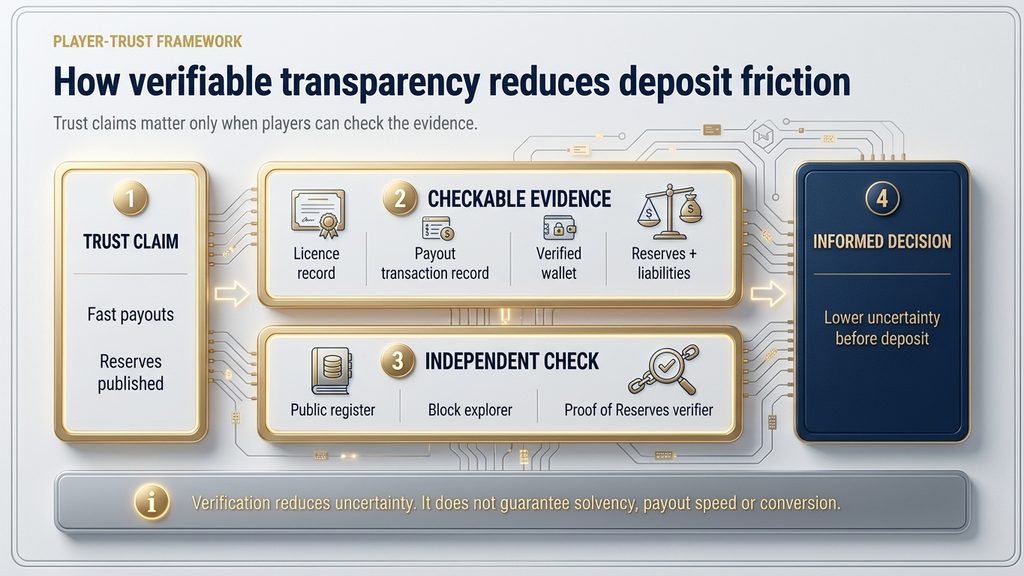
Figure 1. Verifiable evidence reduces uncertainty only when players can check it independently.
What each transparency claim actually proves
Public data answers a defined question. It rarely proves that a casino is solvent or that every withdrawal will be fast.
| Claim | What a player can verify | What it does not prove | Typical check |
|---|---|---|---|
| Published wallet address | Current balance and transaction history at that address | Solvency, total liabilities, cold storage or ownership of all assets | Seconds on a block explorer |
| Merkle-tree proof of reserves | Whether the player’s balance was included in the published snapshot | Complete liabilities, future adequacy or access to every listed asset | Several minutes with the verification tool |
| Third-party attestation | Findings covered by the stated procedure and snapshot date | Continuous solvency or a financial-statement audit opinion | Requires reading the scope and provider report |
| On-chain bets and payouts | Transactions recorded by the relevant contract or address | Legal status, complete game fairness or the right and ability to withdraw | Near real time after confirmation |
| “Fast payouts” claim | Nothing before use, unless supported by historical evidence | Future withdrawal timing | Only after a request or independent check |
Reading the table honestly
Put the last row next to the complaint data above. The most common complaint is delayed payments. The claim players most want to believe is “fast payouts”. And it is the only claim in the table that nobody can check before depositing. That gap is the opportunity for any operator willing to publish evidence instead of adjectives.
A wallet address helps only when the operator proves control and states its purpose. A Merkle-tree proof confirms that a published set includes one account balance. It is the equivalent of confirming your name is on the guest list, which says nothing about whether the venue can seat everyone. It does not show that the set covers every liability or asset.
Third-party proof-of-reserves reports need the same caution. The US Public Company Accounting Oversight Board’s Office of the Investor Advocate warned that such reports do not prove reserves will stay adequate, nor that customer assets are protected. Disclose the scope, date, method and provider. Do not present an attestation as a financial-statement audit, because it is not one.
Why public wallet transparency needs maintenance
Wallet transparency is not a one-time disclosure. It needs active upkeep. Operators rotate hot wallets, shift funds between operational and cold storage, add chains and switch payment processors. An address that was right at launch can go quiet for a perfectly good reason, and the blockchain will not tell a player what that reason is.
So give every published address a disclosure date, network, asset, purpose and proof of ownership. When you replace one, note the change publicly, with the reason. Skip that step and an ordinary wallet rotation looks, from the outside, exactly like money leaving the building.
The balance needs context too
A hot wallet is a payment instrument. It is not supposed to hold large sums. The real treasury may sit in a cold wallet, a fiat account, or on another chain entirely. Judging solvency from a hot wallet balance is like judging a bank by looking inside one ATM.
That cuts both ways. Publish only the hot wallet and a low balance invites the wrong conclusion. Explain what each address is for, and the same number reassures instead of alarming.
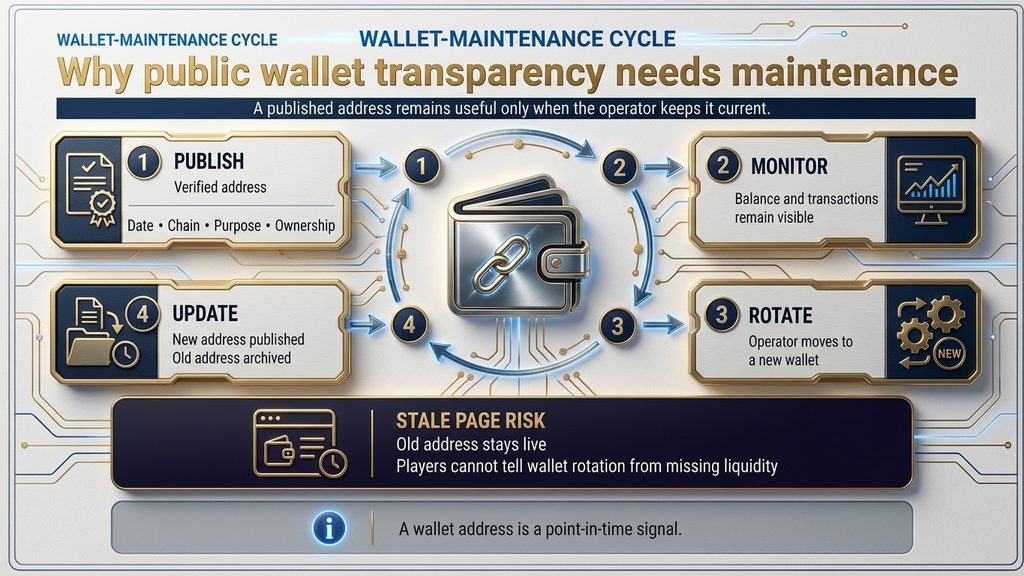
Figure 2. Public wallet transparency requires a visible maintenance cycle.
Put transparency in the acquisition budget
Transparency usually gets filed as a compliance deliverable. It also moves conversion. Google’s current gambling and games policy requires eligible advertisers to apply, target approved countries, show responsible-gambling information and avoid minors. When paid reach is that constrained, every visitor you do win matters more. Removing doubt at the cashier becomes worth real money.
Regulatory controls make a sound foundation. Under the Curaçao Gaming Authority’s current indefinite-term online gaming license conditions, player funds must sit in a segregated account allocated specifically for that purpose. The conditions also cover player-account transactions and the use of virtual currencies. Public disclosure does not replace any of those duties. It can help players and partners understand parts of your control environment.
Keep the two ideas distinct. Compliance asks whether you meet your obligations. Transparency asks which controls you can show publicly without exposing player data, security procedures or sensitive treasury details. A good page connects them without pretending they are the same thing.
Build the minimum credible version first
A first-launch operator does not need an elaborate proof-of-reserves system on day 1. Start by making the basic checks cheap. Name the licensed entity. Link the license number to the regulator’s public record. State withdrawal processing windows plainly. Publish dated wallet information wherever you can prove ownership.
Then give the page an owner and an update rule. Treasury or compliance staff should review it after wallet rotations, network additions, custody changes and payment incidents. Show the last review date. Keep archived addresses visible. A stale transparency page is a smoke alarm with a dead battery: reassuring right up until the moment you need it.
When proof of reserves earns its place
Larger operators may well justify a Merkle-tree system or an independent attestation. If you go there, the disclosure must state which entities, assets and balances are in scope. It must describe the liabilities, the methodology and the provider. And it must say clearly that it is a snapshot, not a continuous control.
Publishing assets without the matching liabilities produces half a balance sheet. It is like posting your bank balance and leaving out the mortgage.
Measure whether the page works
Track whether the page earns its keep. Useful indicators include traffic from the page to the cashier, use of the verification tool, withdrawal-related support contacts, abandoned deposits and questions about wallet ownership. None of these proves cause and effect. Together, they show whether the information gap is closing.
The payoff is not publication day
Transparency pays off when uncertainty peaks. A withdrawal queue builds. Treasury rotates a wallet. A rumor spreads on a forum at 11pm. If the page is current, players and partners can check your position themselves without waiting for support to reply. If it is out of date, the same event breeds doubt instead of settling it.
That makes transparency an operational commitment, not a campaign. Marketing can launch the page. Treasury, compliance and customer support have to keep the evidence accurate and explain its limits. If you are building on DSTGAMING, ask us which of these disclosures the platform can support, and decide early who on your side owns each one.
None of this guarantees trust or conversion. What it produces is a claim that is harder to fake and cheaper for a cautious player to test. In a market full of adjectives, that is rarer than it should be.
See the trust-building features built into DSTGAMING platforms.